
Guidance and Lectures from Yogi Ramaiah
The sequence of the 17 standard Asanas reflect five considerations:
(1). Always start the session with Kriya, Asana Vanakkam, or Kriya Pose of Salutation which gently begins the stretching process and tones up the body for the techniques that follow; always end the session with Purna Shava Shantrhi Asanam or Complete Peace-Relaxation Pose, which can be the counterpose for any asana because it cools the body down and restores the normal pulse rate.
2). Practice the Asanas in pairs. The first Asana in the pair should involve flexion. (bending parts of the body towards each other as in touching the toes). The second in the pair should involve extension (bending part of the body away from each other, as in arcing the back). In this way, the muscles that are active protagonist muscles in the first posture become the passive antagonist muscles in the second posture. This quickens the process of relaxation and lead to balanced, integrated development of the musculature
(3). Practice the Asanas in stages. This enables the body to attain the climax of the posture through a series of tolerable steps and then helps the body to recover poise and balance through a reversal of the stages back to the starting point.
(4). Healthy individuals will be able to complete all the Asanas in an hour and will find that every muscle, tendon and ligament in the human body has been mobilized and stretched. That is to say the 17 standard postures and Science of Sun Worship fit together as a system for efficiently relaxing and massaging every muscle of the human body with a minimum time and effort expended.
(5). Apart from beginning and ending the sequence with the Asanas mentioned in #1, the Asanas may be practised in an order different from the standard order (as long as they are in pairs). Furthermore, the complete sequence is not always required or desirable if an individual doesn't have enough time or energy for the whole course, a favorite pose can be chosen and practised with its counter-pose...
The names of the Asanas are given in Tamil, the ancient language of the Tamil Yoga Siddhas, or Supreme Masters of Yoga in India. Tamil classical terms have been transliterated into English to render as much as possible, the sound of the original term. In addition, English translation is provided to bring out the meaning of the classical terms..."
Yogi S.A.A.Ramaiah
excerpts from Babaji’s Science of Kriya Hatha Yoga Therapy
(Yogi Ramaiah's PhD thesis)
Babaji's Kriya Yoga Lectures of Yogi S.A.A. Ramaiah
Om
Yogi S.A.A. Ramaiah spent many decades, traveling the world teaching The Scientific Art of Babaji‘s Kriya Yogam. In that time, He gave well over 1000 lectures. The organization He founded, through Master’s Grace, International Babaji Yoga Sangam, is now making many of these lectures available for free to the public via podcast, in accordance with Babaji’s teachings. Yogiar, as Yogi Ramaiah is known would use a single word from a single line from a four line verse of one of the Siddhas for inspiration for each lecture.
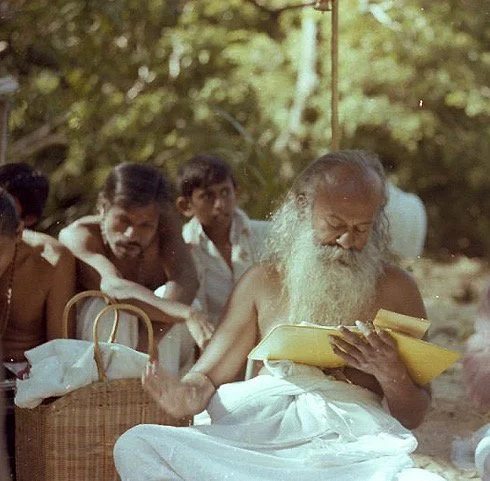
Yogiar’s lectures are based on the teachings of the 18 Tamil Yoga Siddhas. The Siddhas would meditate for one year, 24 hours a day. Then they would crystallize their thoughts into one four-line verse. This intensive sadhana, or spiritual practice, is called Tapas. Yogiar translated these verses over many decades. He kept copies of those verses in binders in his woven Malaysian basket, as seen in the above picture. Yogiar would choose one word in one line of the verse and that would serve as the basis of His lecture. He would begin each lecture by turning to Babaji for inspiration and Guidance.
Yogiar said The Master would on occasion, manifest through Yogiar and deliver the lecture Himself. Yogiar would leave his physical body and sit on the floor with the rest of the sadhaks listening to Master deliver the lecture. If Yogiar had not told us, we have never known that happened.
Yogiar did mention on several occasions that we had no idea how close we were to The Master. We never understood what He meant.
Following each lecture, Yogiar would call for “lucid questions and answers” at one time, then turn to the Master for inspiration, chant Om Kriya Babaji Nama Aum Name and begin answering the questions.
Something extraordinary happened on one occasion at the old New York center in the East Village on East 7th Street that could have easily been overlooked. On that Monday evening in the early 1970’s, Yogiar gathered each of the 20 or so random questions on a variety of subjects and wove them into a cohesive story. In the course of telling that story, He answered each question in the chronological order in which it was asked without breaking from the storyline. Such was Yogiar’s mastery of the intellect at the Golden Lotus Feet of Babaji.
That state of consciousness in the higher reaches of Yoga is referred to as Vijnana Samadhi or the Universal Vision of Love. In more familiar terms, it is mastery over the Buddhi, or the intellectual plane which Yogiar mentioned having attained.
Yogiar never prepared even for one minute for any of his thousands of lectures. His lectures lasted about one hour. These lectures are a treasure of inspiration and another example of Yogiar’s attainment of Unconditional Surrender to Babaji. All for the benefit of Ages to Come.
Om Kriya Babaji Nama Aum.
12,000 Years of Perfecting
Yogiar tells how Bogar describes taking over the body of a Chinese farmer who died and spends 12,000 years perfecting it until it attains immortality. Once that happens, that being becomes known as Lao Tzu.
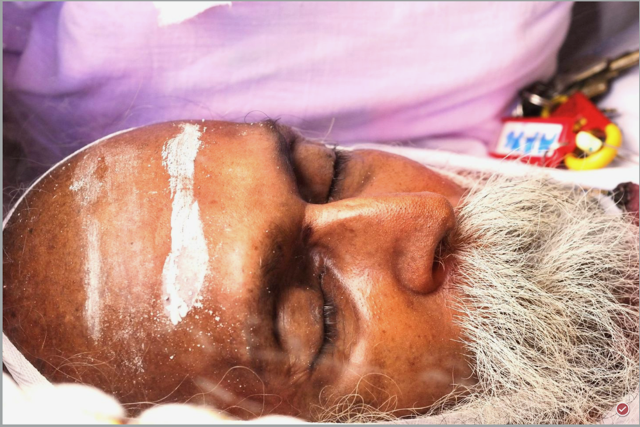
This MahaSamadhi image of Yogiar was taken on July 18, 2006, six days after Yogiar left the Physical plane. His body became radiant after He stopped breathing, unlike us ordinary folks. The picture was taken at our Chennai ashram in the extreme heat of the South Indian summer. Yogiar’s body lay in Rest on the exact spot where Babaji materialized in 1952, and healed Yogiar of Bone Tuberculosis. The disease had crippled Yogiar for several years, confining Him to bed in a metal body cast.
At that time, Babaji instructed Yogiar to live for "My sake". The Master told Yogiar that He felt the need for an organization in His own Name and instructed Yogiar to found International Babaji Yoga Sangam. From that moment on Yogiar dedicated His life to Master’s cause until He attained MahaSamadhi and Thereafter.
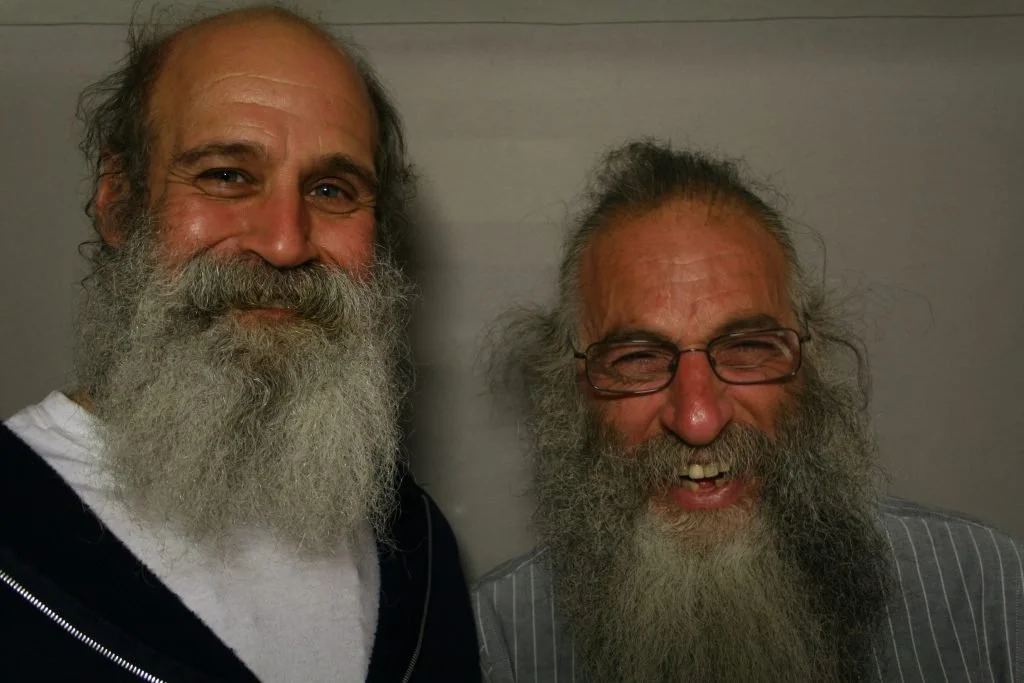
Sadaks recall death of the Guru
S. Srinivasan (55) talks to his friend, M. Meenakshisundaram (58) about the death of the Guru, Yogiar, on July 12, 2006 in Malaysia. Recorded January 10, 2010.